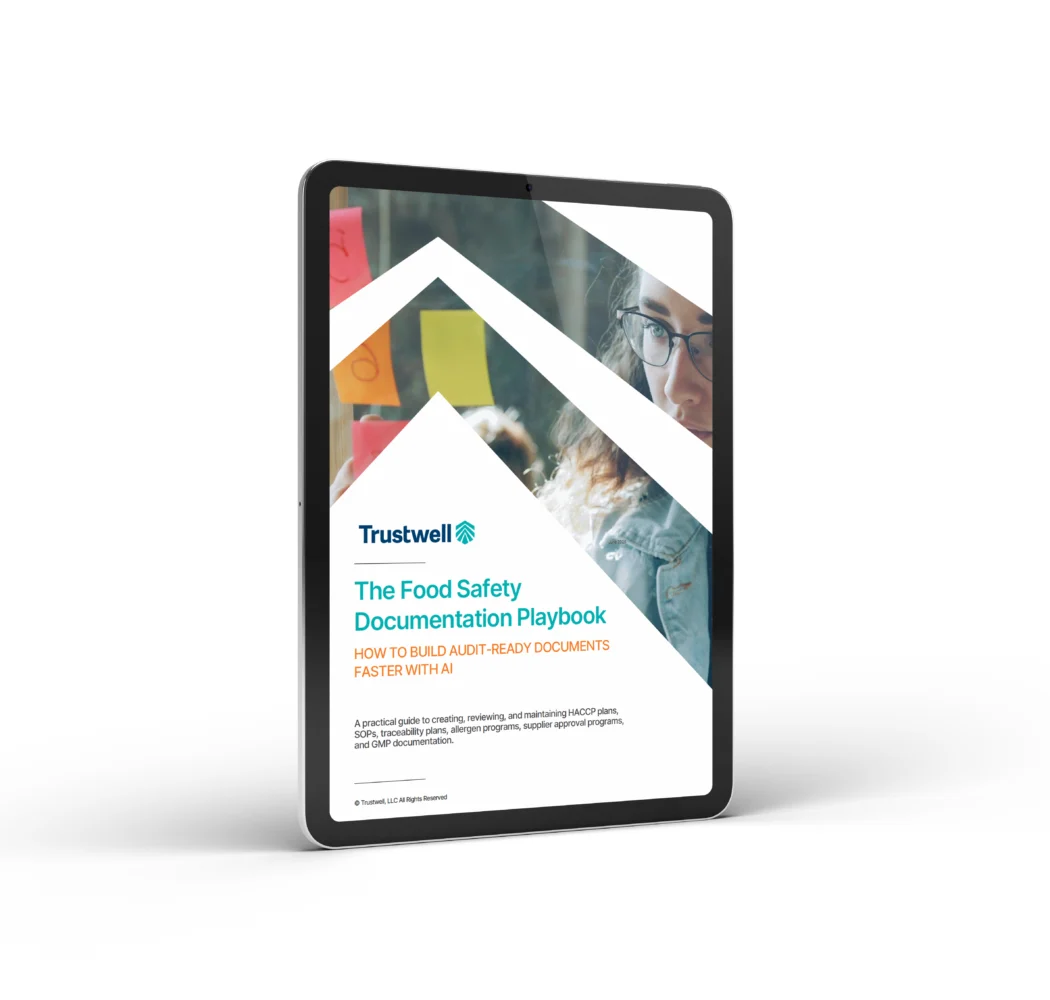
The Food Safety Documentation Playbook
Build Audit-Ready Food Safety Documents Faster With AI
Food safety programs depend on clear, current documentation, but maintaining HACCP plans, SOPs, traceability plans, allergen programs, supplier approval programs, and GMP documentation can take significant time.
The Food Safety Documentation Playbook offers a practical approach to creating, reviewing, and maintaining these essential documents with AI-assisted workflows. Learn where AI can help teams organize information, develop structured first drafts, and identify potential gaps—and where qualified food safety professionals must review, validate, and approve the final content.
Download this playbook to strengthen document control, reduce manual work, and build a food safety library that reflects how your organization operates.
What You’ll Find Inside:
- Essential Documents Every Food Safety Program Needs: Review the purpose and key components of HACCP and food safety plans, SOPs, GMP documentation, allergen management plans, supplier approval programs, traceability plans, and supporting records.
- A Practical Framework for Audit Readiness: Learn how clear ownership, consistent terminology, current procedures, supporting evidence, and controlled review cycles can help teams prepare for audits throughout the year, and not just when an audit is approaching.
- 6 AI-Assisted Documentation Use Cases: See practical examples for creating and maintaining core food safety documents without starting each project from a blank page.
- A More Efficient Way to Manage Documentation: Learn how Playbook in FoodLogiQ Compliance can help teams create structured documents, centralize information, support collaboration, and move reviews forward more efficiently.
Build a Stronger Food Safety Documentation Program
Food safety documents become harder to manage as organizations add facilities, suppliers, products, certification schemes, customer requirements, and regulatory obligations. Important details may be spread across spreadsheets, emails, shared drives, supplier portals, paper records, and employee knowledge.
This playbook helps food safety and quality teams address those challenges with practical guidance for organizing information, assigning ownership, updating procedures, and maintaining consistency across the document library.

Create Documents From Structured Information
Use existing program details, facility information, processes, and requirements to create a more useful first draft.

Keep Procedures Connected to Actual Work
Build documents that reflect current responsibilities, equipment, products, workflows, and practices instead of relying on outdated templates.

Strengthen Reviews and Approvals
Clarify document ownership and give subject-matter experts a structured starting point for review, validation, and approval.

Find Gaps Before an Audit or Incident
Review documents for missing details, inconsistent language, unclear responsibilities, and outdated information before those issues create larger risks.

Ready to Build Audit-Ready Documents Faster?
Download The Food Safety Documentation Playbook and learn how to create, review, and maintain stronger food safety documentation with responsible AI support.